
x

It's time for software that actually fits Fotobaren.

Use ← → to navigate
Open by positioning the proposal around their board decision: direction first, vendor second. The recommendation is not "rebuild Podio"; it is to redesign the operating workflow around Fotobaren's team.

Fotobaren has outgrown Podio

Manual bridges

Gallery links, line items, packing dates, and some customer/payment follow-up still rely on the single, manual Podio interface.

Operational risk

With over 1,000 events per year, every dropped handoff creates real customer, logistics, or revenue risk.

Too much legacy

The current system contains data and fields that no longer reflect how the business should operate going forward.

Use this slide to prove the proposal is based on their actual call, not a generic pitch. Mention Podio only if useful; the issue is bigger than one tool.

Not a prettier Podio. A cleaner way to run the business.

The best path is to map the work from first principles, keep what already works, and remove the friction that only exists because of old tools.

"We want a tool we're happy with and don't have to redo in two years."

Johannes, intro call
This is the anchor for the full-code recommendation. It reframes the decision away from cheapest vendor and toward avoiding a second rebuild.

From workflow
to software.

We shape the product with the people who will use it, then turn the validated workflow into a production system.
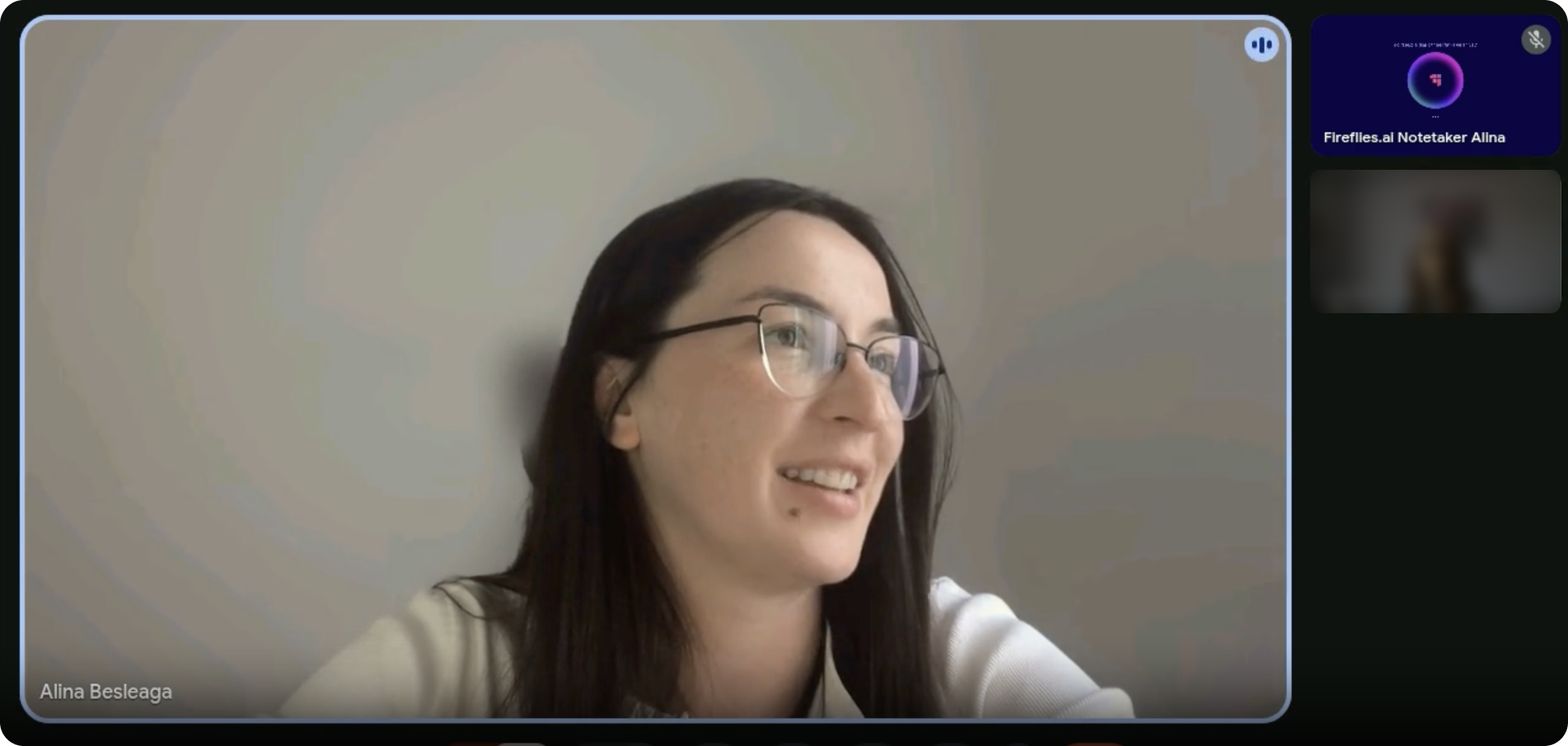
Alina in a 1:1 client interview

1:1 interviews

Alina speaks with the key team members to understand how sales, operations, packing, logistics, and management really work day to day.

Prototype preview

Prototyping

We turn the mapped workflow into a clickable, working prototype so the team can react to something concrete.

Group prototype review

Group review

The team reviews the prototype together, spots cross-functional issues, and aligns before production development starts.

Keep this practical. The proposal should not overpromise "AI agents everywhere"; it should say AI is valuable when attached to real workflows.

Build it in full code.

Fotobaren's workflow is too specific for another boxed-in tool. The system should be built around how the team actually works.

What full code means

A custom web app for the team to run bookings, events, inventory, packing, delivery, and follow-up.

A proper database that becomes the source of truth for customers, orders, units, payments, and event status.

Direct integrations with the website, accounting, shipping, gallery software, and email/SMS where useful.

Standard hosting and services so the system is portable, maintainable, and not locked inside Retool, Glide, or another no-code platform.

Keep this high-level. Do not list framework names. The point is full-code ownership, flexibility, and practical integrations.

Why not Retool, Glide, or another no-code route?

Word of caution

We are currently helping a business migrate from Retool to full code because they need more flexibility and are overpaying for Retool seats.

Decision factor
No-code / Retool-style build
Full-code platform

Process fit

How closely the software can match Fotobaren's actual operations.

Fast for standard admin panels, but harder when the workflow becomes highly specific.

Designed around the exact sales, logistics, packing, delivery, inventory, and customer lifecycle.

Long-term ownership

Ability to evolve without platform constraints.

Often tied to platform pricing, plugin limits, vendor patterns, and agency-specific infrastructure.

Portable codebase, standard infrastructure, easier future handover, and fewer proprietary constraints.

AI leverage

How well the system can use modern AI development and automation.

Useful for quick apps, but can become awkward when adding custom logic or advanced automation.

AI speeds up prototyping, iteration, maintenance, and selective workflow automation directly in the codebase.

Acknowledge that Retool can be cheaper and fast. The argument is not that no-code is bad; it is that Fotobaren's needs are moving beyond what no-code handles elegantly.

Why Launchleanly?

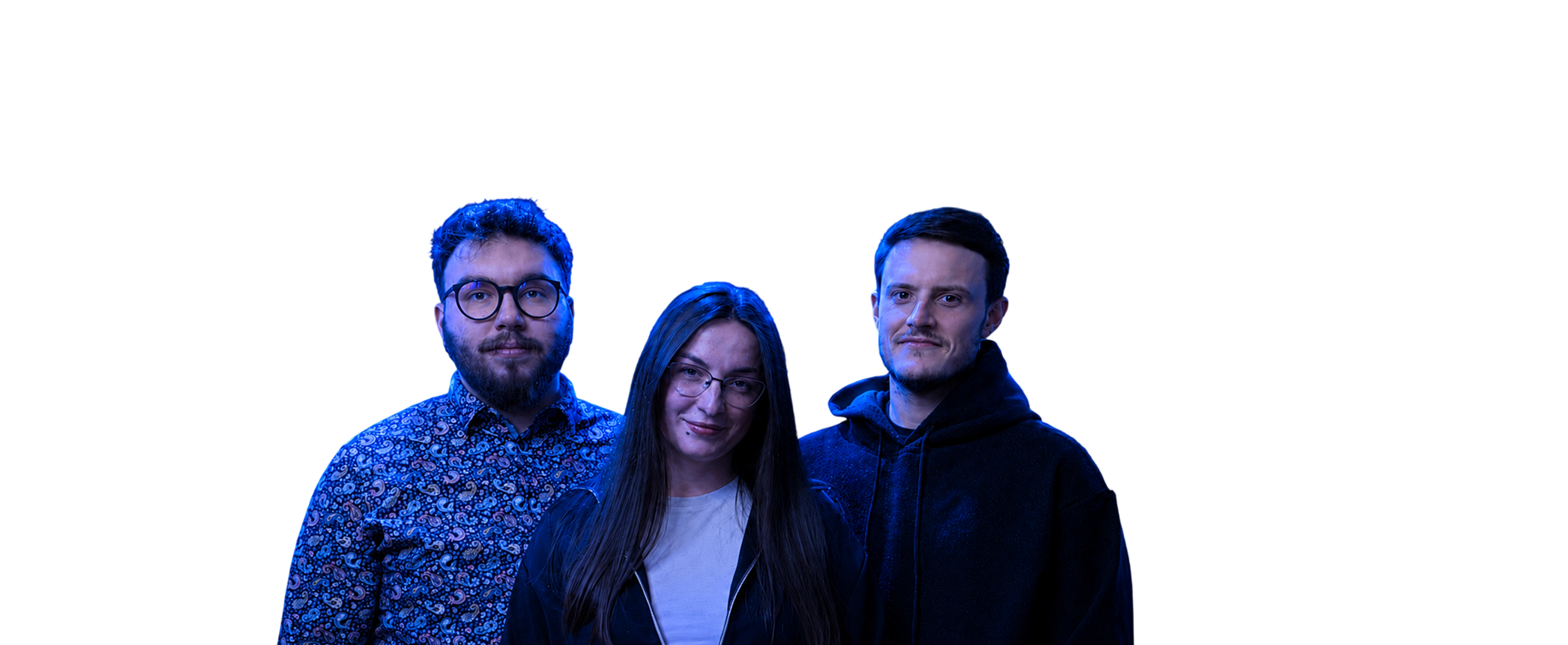
Launchleanly team
Use the team image as the human proof point. Keep this about why Launchleanly is a good fit, not a generic agency capability slide.

We operate like a small embedded product team.

1. Listen first

We map the workflows with the people who actually use the system: sales, operations, packing, logistics, and management.

2. Prototype fast

Within roughly two to three weeks, the team can test a working prototype against real event scenarios and edge cases.

3. Build the signed-off version

Once the workflow is validated, we develop the production application with integrations, permissions, data migration, and deployment.

If you need to rebuild this in two years, we have not done our job correctly.

This slide mirrors the website's promise: process mapping, prototypes, real workflows, then development. Keep the tone consultative.

You're always in the loop.

Once development starts, communication should not disappear into a black box. You get regular release updates and live visibility.
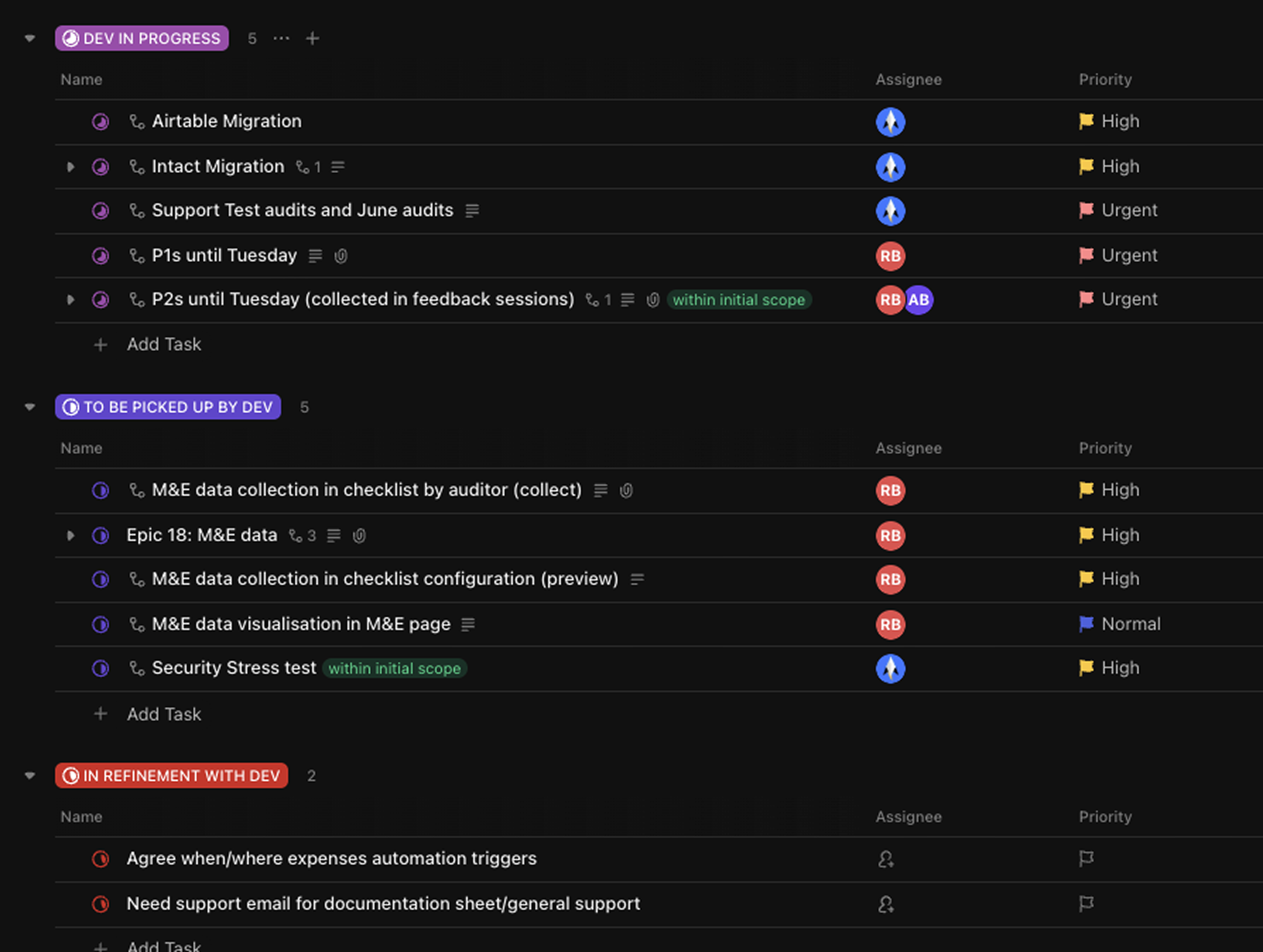
Live development task board

Live task board

Access to the development board, so you can see what is being worked on at any point.
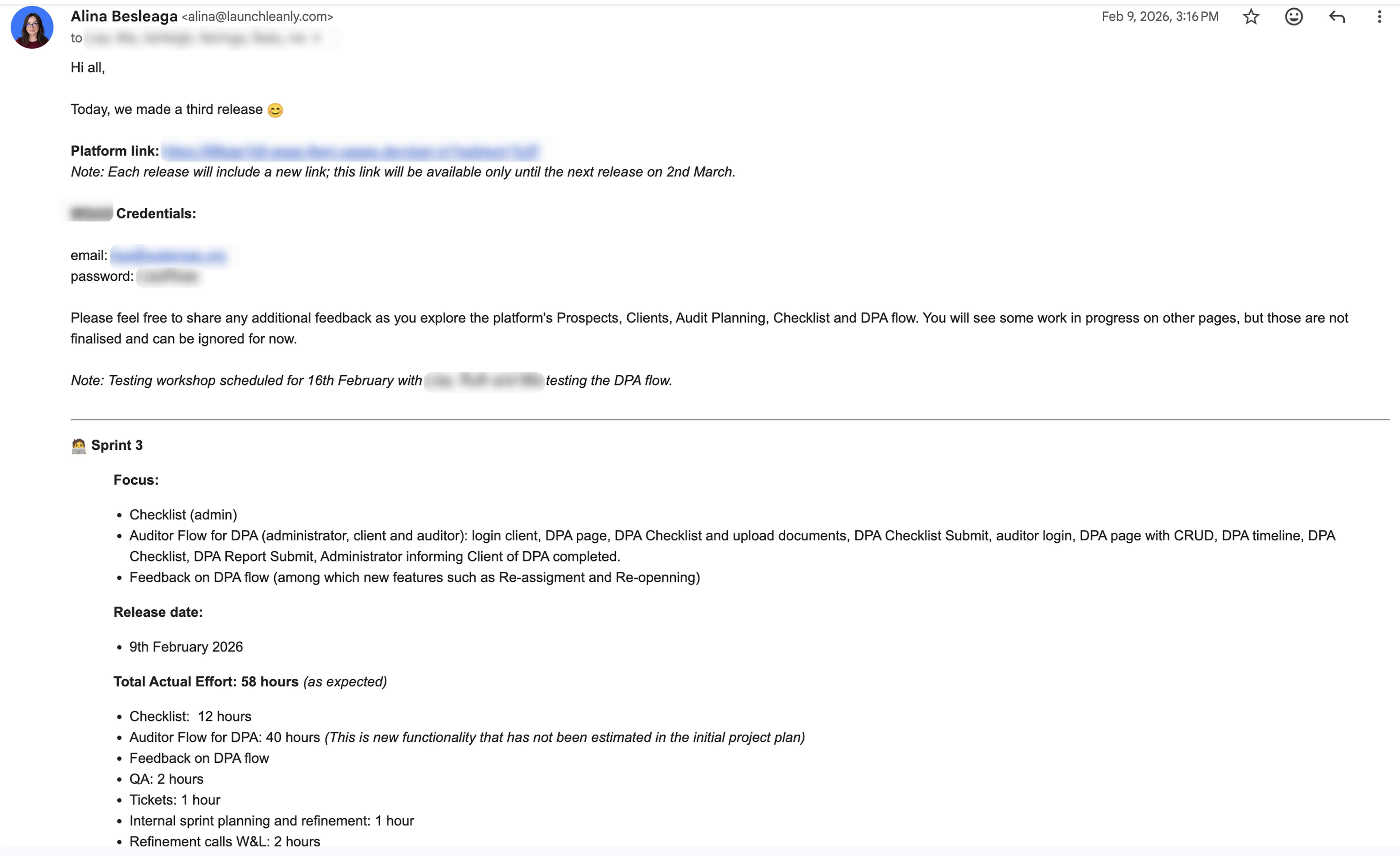
Sprint release update email

Sprint updates

Clear emails after releases: what shipped, what changed, and what the team can now test.
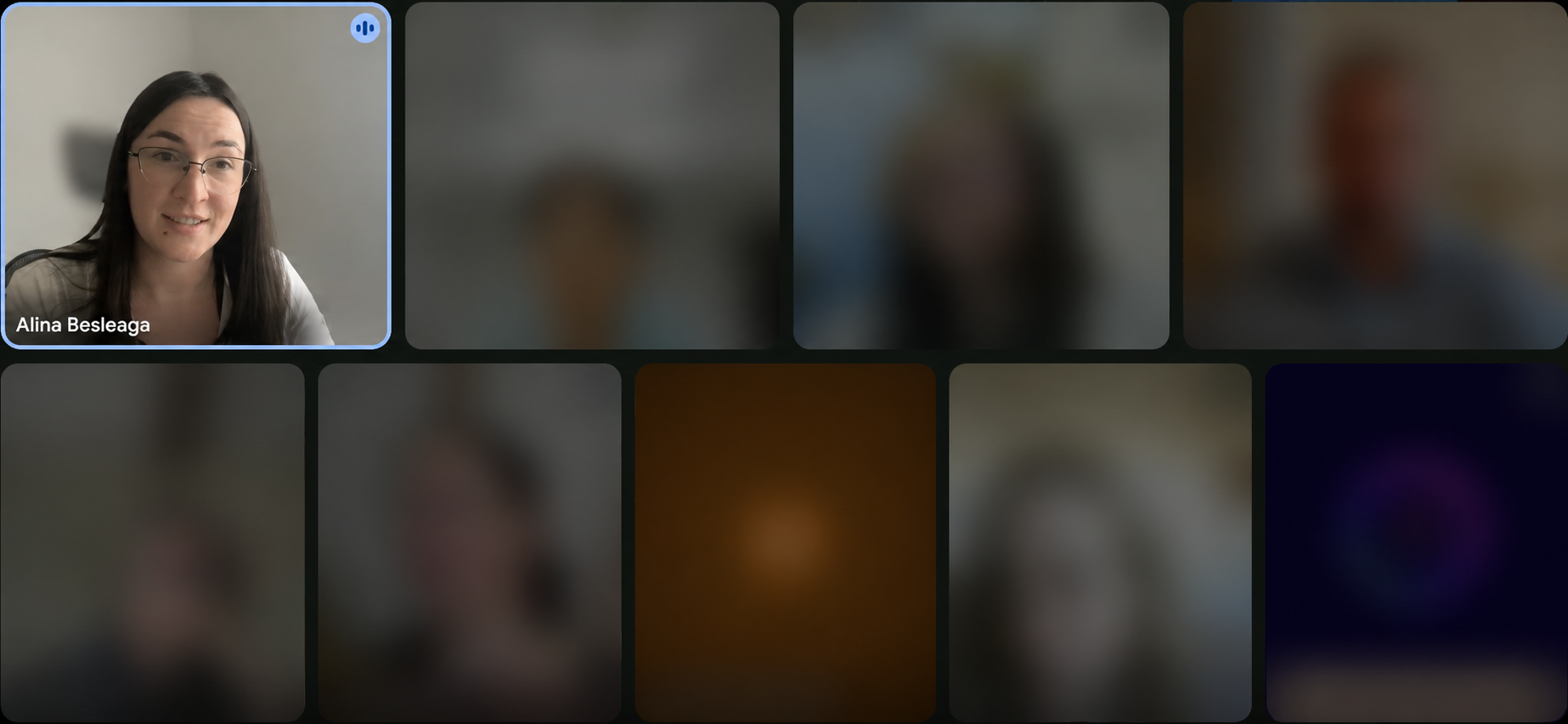
Feedback sessions

Regular review calls as the team gets hands-on, because requirements naturally change once people start using the product.

This slide should reassure the client that development will be transparent: regular shipped-feature updates plus live access to the project board.

A realistic V1 can be live in about two months.

Week 1

Discovery and workflow mapping

Interview key team members, document current workflows, identify pain points, and agree what should change.

Weeks 2-3

Prototype and team iteration

Create a working prototype and test it with the team before committing to the production build.

Weeks 4-7

Production build

Implement core modules, integrations, permissions, event workflows, and data structures.

Week 8

Migration, testing, and launch

Load real data, test with live workflows, train users, and launch in a controlled way.

Stress that this is indicative. The biggest variable is not development speed, but team availability and iteration count.

A realistic budget estimate.

Likely total €20k-€30k Based on the initial conversation at €100/hour. We confirm the final scope after workflow mapping.
2-3 weeksTo reach a working prototype that the team can react to.
~2 monthsIndicative path to a working application if feedback cycles are efficient.
€100-€200/moTypical infrastructure range for hosting, email, file storage, and supporting services.
No forced retainerOngoing support can be agreed based on actual needs after launch.
Be careful: this is a range, not a fixed quote. Include the monthly services detail because Johannes specifically asked for it.

Build in milestones.

The first release should be narrow enough to launch, but structured so each milestone replaces a real piece of the current workflow.

Milestones to be decided. These are illustrative estimates, shown to demonstrate how we would build in staged releases.
01

Event backbone

Bookings, customer details, payment status, add-ons, dates, and event status in one place.

02

Inventory and packing

Unit assignment, readiness, packing checklist, damage reports, and event history.

03

Logistics and returns

Shipping method, pickup labels, courier flow, return dates, and local pickup/drop-off handling.

04

Automation layer

Website intake, gallery links, accounting status, customer follow-up, and team notifications.

Do not imply all future dreams are included in V1. The wording protects scope while still sounding ambitious.

Recent projects

Quacquarelli Symonds project

Quacquarelli Symonds

World's leading provider of education analytics.

What we built
Helped ideate and build the first iteration of a new standalone platform for students.
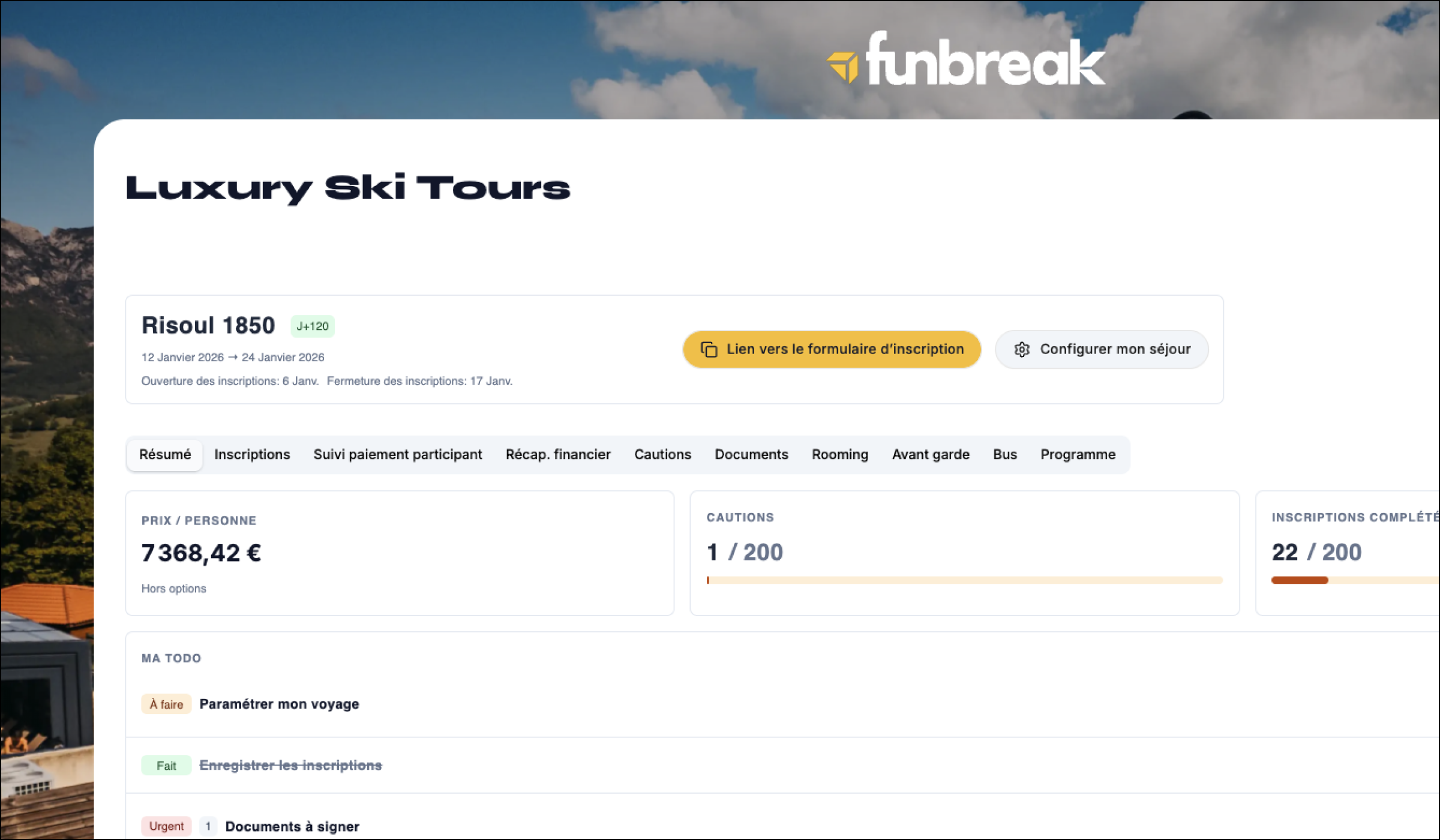
Funbreak project

Funbreak

One of France's leading student tour operators.

What we built
A custom booking and operations platform for managing tours, customers, payments, and internal workflows.
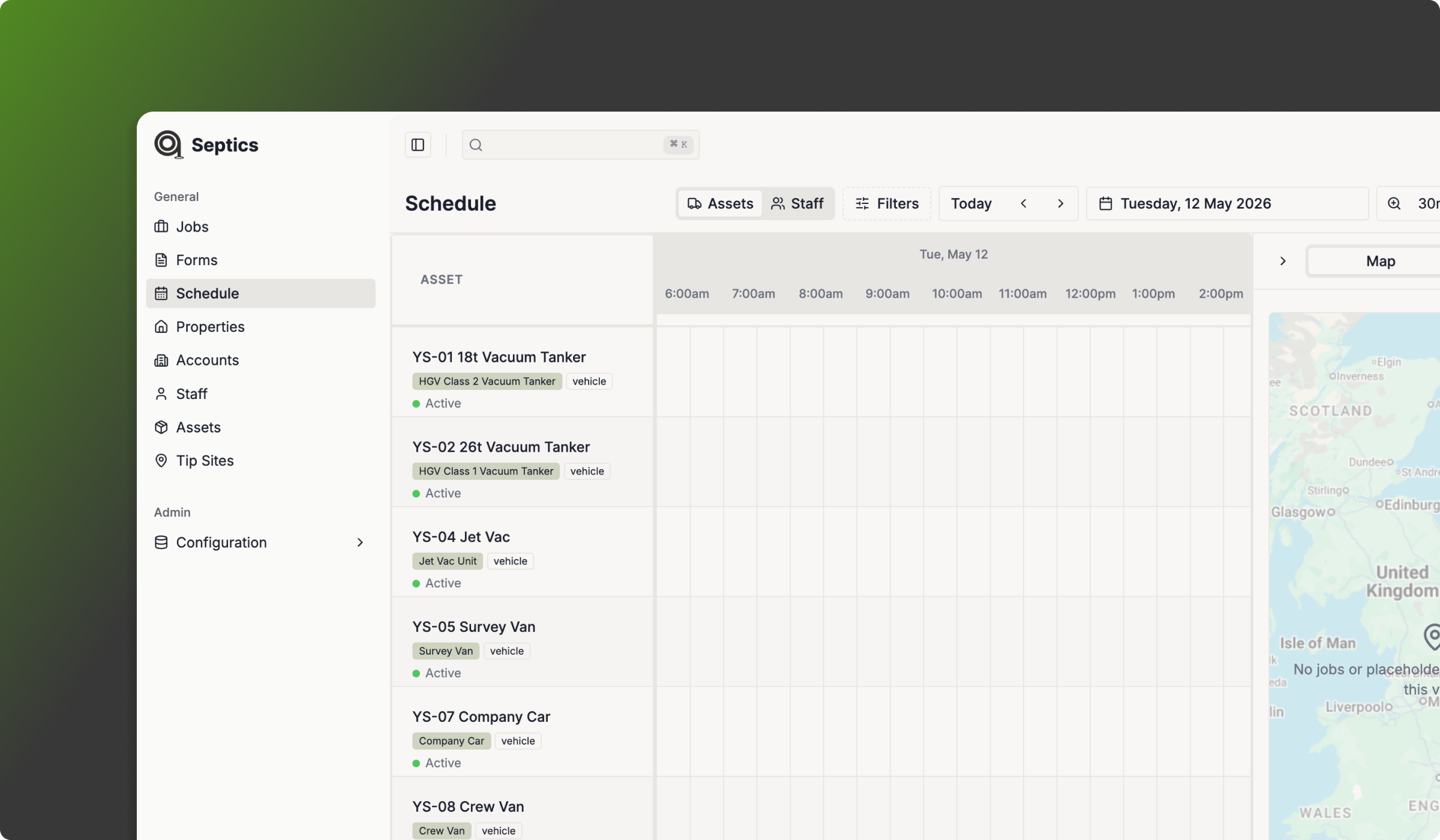
Western Septics project

Northern Septics

Large septics company managing northern UK.

What we built
A custom operations platform for scheduling, job management, customer records, and team visibility.

Replace image paths and project titles once the final case-study assets are added.

We're ready when you are.

Suggested next steps
1. AlignConfirm the key team members we need to speak with.
2. DiscoverMap how the current workflow actually runs day to day.
3. PrototypeCreate a fully interactive prototype around the optimal processes of Fotobaren.
matthew@launchleanly.com
Close with a simple ask: approve direction and discovery. Avoid asking the board to approve the whole build before seeing the mapped process.